
 +1 646 595 1666
  sales@hireecom.com
 +91 8287203228

The Complete Guide to Headless Magento 2 Implementation (2026 Update)
As ecommerce continues to evolve in 2026, speed, flexibility, and omnichannel experiences are no longer optional—they’re expected. Traditional monolithic ecommerce platforms often struggle to keep up with these demands. That’s where headless Magento 2 comes in.
This guide to headless Magento 2 implementation is designed for CTOs, ecommerce managers, and growth-focused brands looking to future-proof their online stores. We’ll cover what headless Magento 2 is, its benefits, implementation steps, challenges, and when it makes sense to hire Magento 2 developer teams for custom builds.
What Is Headless Magento 2?
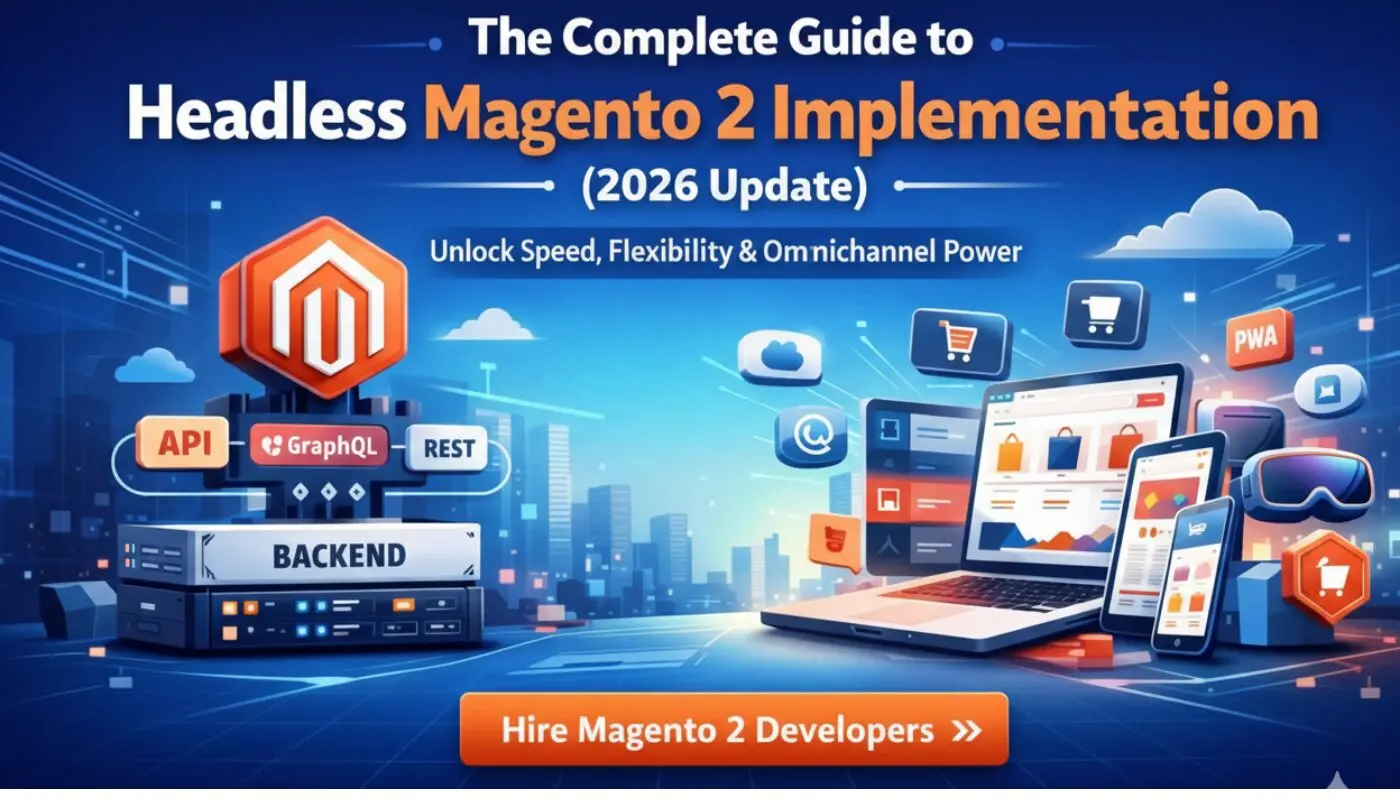
Headless Magento 2 is an API-first ecommerce architecture where the frontend (presentation layer) is decoupled from the backend (commerce engine). Instead of Magento controlling both UI and business logic, the backend exposes data through APIs (REST, GraphQL), while the frontend is built using modern frameworks like React, Vue, or Next.js.
At its core, Magento 2 acts as the commerce brain, handling:
- Product catalogs
- Inventory management
- Pricing & promotions
- Orders & customer data
Meanwhile, the frontend is free to evolve independently—resulting in faster performance and better user experiences.
Why Headless Magento 2 Is a Smart Choice in 2026
1. Lightning-Fast Performance
Modern shoppers expect sub-second load times. Headless setups leverage lightweight frontends and CDN-based delivery, dramatically improving Core Web Vitals and SEO rankings.
2.Omnichannel Flexibility
Sell seamlessly across:
- Web stores
- Mobile apps
- PWAs
- IoT devices
- Marketplaces
Magento’s backend can power all these channels simultaneously through APIs.
3. Complete Frontend Freedom
Design teams are no longer limited by Magento themes. You can create custom UX/UI experiences without touching backend logic.
4. Improved Security & Scalability
Decoupling reduces frontend attack surfaces and allows independent scaling of frontend and backend services during traffic spikes.
5.Future-Proof Architecture
Headless aligns perfectly with:
- Composable commerce
- Microservices
- AI-driven personalization
- Voice & AR commerce
Headless Magento 2 Architecture Explained
A typical headless Magento 2 stack looks like this:
- Backend: Magento 2 (Admin, Catalog, Checkout, APIs)
- APIs: GraphQL (preferred), REST
- Frontend: React / Next.js / Vue / PWA Studio
- Middleware (optional): CMS, ERP, CRM, payment gateways
- Hosting: Cloud-based infrastructure (AWS, Azure, Magento Cloud)
This separation allows teams to innovate faster without risking backend stability.
Step-by-Step Guide to Headless Magento 2 Implementation
Step 1: Define Business Goals
Before going headless, ask:
- Do you need faster performance or omnichannel expansion?
- Are custom UX and scalability critical?
- Do you have in-house frontend expertise?
Headless is powerful—but not always necessary for small, simple stores.
Step 2: Choose the Right Frontend Approach
Popular options in 2026 include:
- Magento PWA Studio (official, tightly integrated)
- Next.js + GraphQL (SEO-friendly, high performance)
- Vue Storefront (popular in Europe, modular)
Each has trade-offs in speed, cost, and flexibility.
Step 3: Configure Magento 2 APIs
GraphQL is the backbone of headless Magento. You’ll need to:
- Enable and optimize GraphQL endpoints
- Secure APIs with proper authentication
- Customize schemas for advanced use cases
This step often requires experienced Magento backend developers.
Step 4: Build the Headless Frontend
Frontend teams consume Magento APIs to build:
- Product listing pages
- PDPs
- Cart & checkout flows
- Account dashboards
SEO, accessibility, and performance optimization must be baked in from day one.
Step 5: Integrate Third-Party Services
Common integrations include:
- Headless CMS (Contentful, Strapi)
- Payment gateways
- Analytics & personalization tools
- ERP and CRM systems
Middleware may be used to orchestrate complex data flows.
Step 6: Testing, Optimization & Launch
Key focus areas:
- API response times
- Frontend caching strategies
- Load testing during peak traffic
- SEO validation (indexing, schema, CWV)
Challenges of Headless Magento 2 (and How to Solve Them)
| Challenge | Solution |
|---|---|
| Higher development cost | Start with MVP headless setup |
| Complex architecture | Work with certified Magento experts |
| SEO misconfiguration | Use SSR/SSG frameworks like Next.js |
| Longer initial setup | Long-term ROI justifies investment |
When Should You Hire Magento 2 Developer Teams?
You should hire Magento 2 developer specialists if:
- You need custom GraphQL APIs
- Your checkout or pricing logic is complex
- You’re migrating from a monolithic Magento store
- Performance and scalability are business-critical
- You want enterprise-grade security & compliance
Certified developers ensure best practices, faster delivery, and fewer costly mistakes.
Why HireEcom for Headless Magento 2 Development?
At HireEcom, we specialize in custom headless Magento 2 implementations for fast-growing ecommerce brands. Our certified Magento developers bring:
- Deep expertise in GraphQL & API-first architecture
- Scalable frontend development with React & Next.js
- Secure, performance-optimized Magento backends
- Seamless third-party integrations
Whether you’re planning a migration or building a headless store from scratch, our team ensures a future-ready solution tailored to your business goals.
Final Thoughts
Headless Magento 2 is no longer just a trend—it’s a strategic advantage in 2026. Brands that prioritize speed, flexibility, and omnichannel experiences are increasingly adopting headless architectures to stay competitive.
If you’re serious about scaling your ecommerce business, this guide to headless Magento 2 implementation should serve as your starting point—and partnering with the right experts can make all the difference.
Looking to hire Magento 2 developer teams for your headless project?
Connect with HireEcom and build a high-performance ecommerce experience that’s ready for the future.